Have you ever noticed a character who seems important, yet never truly takes center stage—someone whose main purpose is to make another character clearer, sharper, or more memorable? That’s not accidental. Writers intentionally design certain characters to reveal others. Understanding this concept instantly improves how you read novels, watch films, or analyze stories. This article breaks down exactly what a character foil is, how it works, and why it remains one of the most powerful storytelling tools used today.
What a Character Foil Actually Is (Plain and Simple)
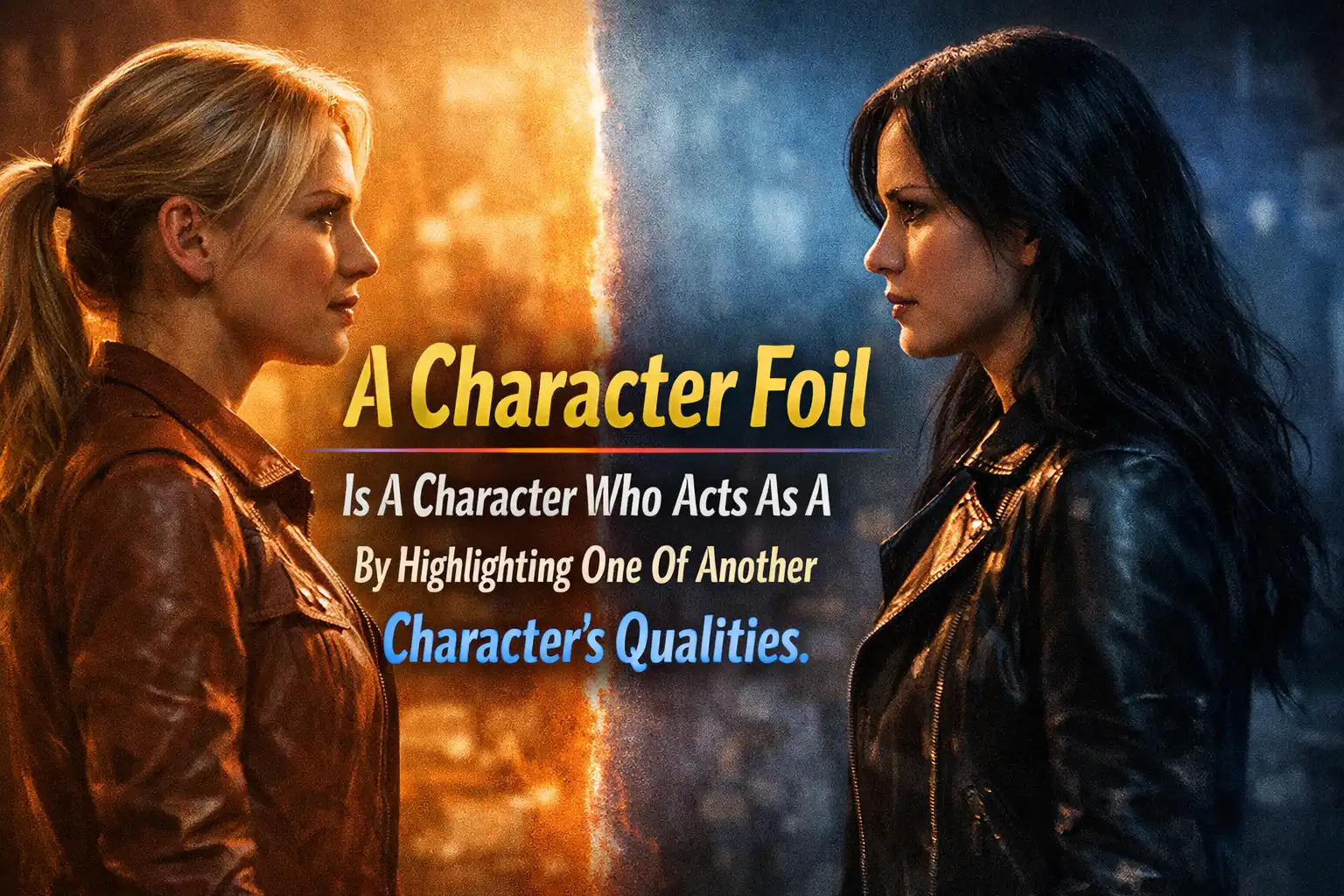
A character foil is a character created to contrast with another character in order to highlight specific qualities, traits, or values of that other character. The foil does not exist to overshadow the main character, but to reflect them—often by being different in temperament, morals, decisions, or worldview.
The contrast can be subtle or extreme. Sometimes a foil mirrors the protagonist in background but differs in choices. Other times, the foil is the complete opposite in personality. What matters is the effect: the main character becomes easier to understand because of the comparison.
How Foils Work Beneath the Surface of a Story?
Foils operate through contrast rather than explanation. Instead of telling readers “this character is brave,” the story shows bravery by placing the character beside someone who avoids risk. Instead of stating that a hero is compassionate, a foil may behave selfishly in the same situation.
This technique allows writers to:
-
Reveal personality traits naturally
-
Create tension without conflict-heavy scenes
-
Deepen character arcs without exposition
-
Reinforce themes through comparison
The reader or viewer does the mental work of comparison, which makes the characterization feel organic and memorable.
Foil vs. Antagonist: A Common Misunderstanding
One of the most frequent misconceptions is that a foil must be an enemy. While antagonists can be foils, they don’t have to be. A foil can be:
-
A friend
-
A sibling
-
A romantic interest
-
A rival
-
Even a secondary or minor character
An antagonist’s primary role is to oppose the protagonist’s goals. A foil’s role is to highlight traits. Sometimes one character serves both functions, but they are not the same narrative tool.
Different Types of Character Foils
Not all foils work the same way. Writers choose different forms of contrast depending on the story’s needs.
Personality-Based Foils
These foils emphasize differences in temperament or behavior. A calm, rational character paired with an impulsive one allows the reader to clearly see both traits in action.
Moral or Ethical Foils
In this case, the characters may be similar in skill or status but differ in values. Their choices under pressure reveal what truly defines them.
Situational Foils
Two characters face the same circumstances but respond differently. This highlights decision-making rather than inherent personality.
Parallel Background Foils
Characters share similar origins—such as upbringing, trauma, or opportunity—but end up on different paths. This reinforces themes of choice and consequence.
Why Writers Rely on Character Foils So Often?
Foils are efficient. They allow writers to develop characters without lengthy internal monologues or heavy narration. In visual media especially, foils are essential because audiences learn through action and contrast.
Foils also:
-
Add realism by showing varied human responses
-
Prevent protagonists from feeling flat or idealized
-
Strengthen themes like ambition, loyalty, power, or morality
-
Create dynamic relationships that feel layered and authentic
In modern storytelling, especially in television and film, foils are often used across multiple seasons or installments to track long-term character growth.
Character Foils in Modern Storytelling
Contemporary stories often use more complex foils than older literature. Instead of simple opposites, modern foils may share some traits while differing in crucial ways. This reflects real human complexity.
For example, two characters might both be ambitious, but one pursues success ethically while the other cuts corners. The contrast feels grounded and psychologically realistic, making both characters more believable.
Streaming-era storytelling has also allowed foils to evolve over time. A foil may initially contrast the protagonist, then gradually shift, revealing how influence, growth, or corruption affects people differently.
How Character Foils Strengthen Themes?
Themes are abstract ideas—justice, identity, freedom, power. Foils turn those abstractions into human behavior. When two characters embody different responses to the same theme, the audience doesn’t just understand the message—they feel it.
Instead of stating that “power corrupts,” a story might show two characters gaining power and choosing opposite paths. The contrast delivers the theme without preaching.
This is why foils are especially powerful in character-driven narratives. They connect internal traits to external consequences.
Using Character Foils in Your Own Writing
If you’re a writer, understanding foils can immediately improve your character development. When creating a foil, focus on:
-
One or two traits you want to highlight in your main character
-
A believable alternative way of thinking or behaving
-
Shared situations that allow comparison
Avoid making foils one-dimensional. The best foils feel like real people with their own motivations, not tools designed solely for contrast.
Frequently Asked Questions
Can two main characters be foils to each other?
Yes. Many stories use dual protagonists who function as mutual foils, each revealing the other’s strengths and flaws.
Is a foil always intentional?
In strong writing, yes. Even if readers don’t consciously notice it, effective foils are deliberately crafted.
Can a minor character be a foil?
Absolutely. A foil does not need significant screen time to be effective.
Are foils only used in literature?
No. Films, television, games, and even comics rely heavily on foil characters.
A character foil is more than a supporting role, it’s a storytelling lens. By placing characters in contrast, writers allow audiences to see personality, values, and growth with clarity and emotional impact. Whether subtle or dramatic, foils deepen stories and make characters unforgettable.