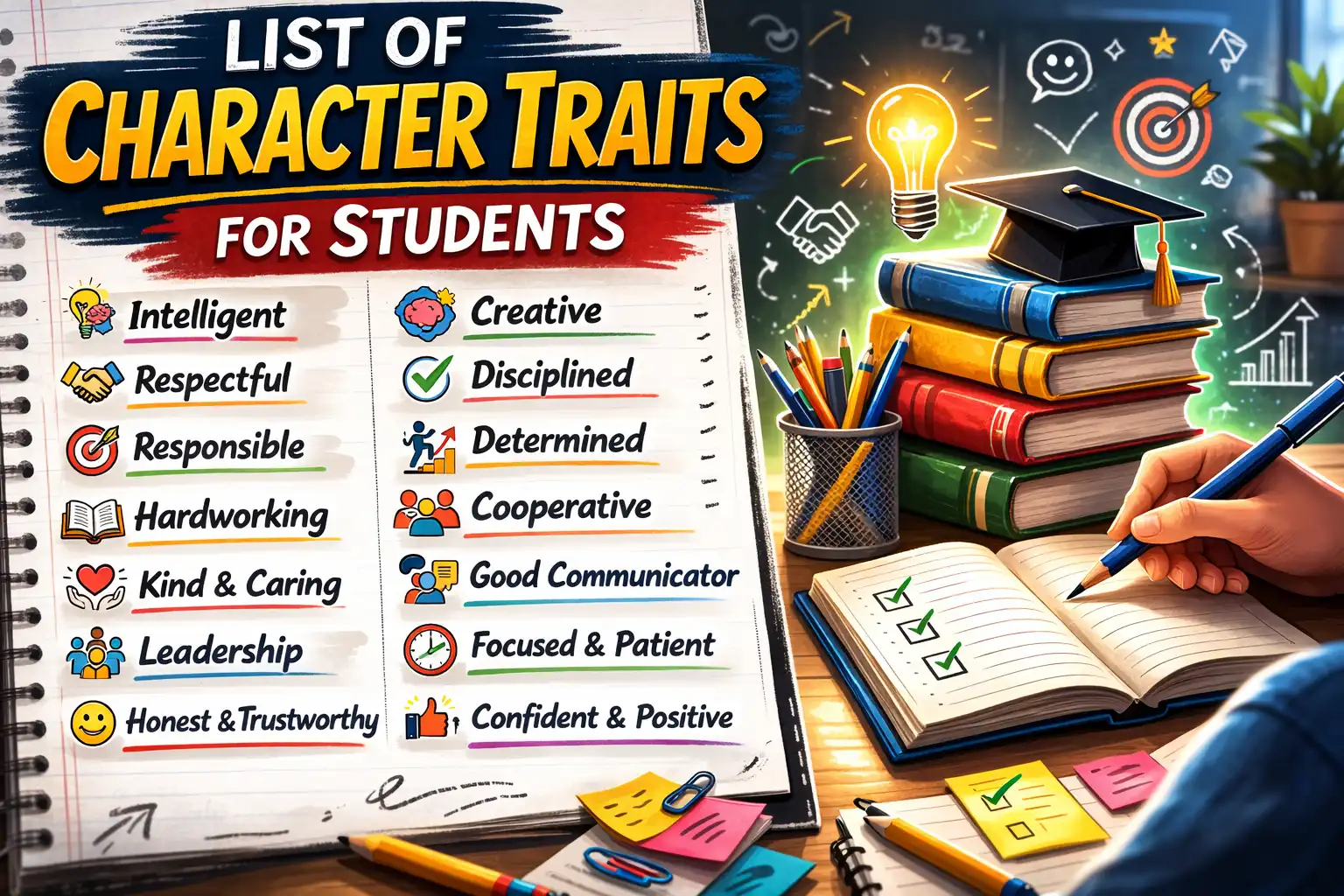
Character traits are the personal qualities and moral values that shape a student’s behavior, attitude, and interactions with others. Developing strong character traits helps students succeed academically, build healthy relationships, and grow into responsible, confident individuals. Schools and educators often emphasize character education because these traits support both personal development and lifelong success.
List of Character Traits for Students
Below is a detailed list of essential character traits for students, along with explanations of why each trait matters.
Responsibility
Responsibility is the ability to be accountable for one’s actions, duties, and commitments. Responsible students complete assignments on time, follow school rules, and accept the consequences of their choices. This trait helps students develop independence and prepares them for future academic and professional responsibilities.
Honesty
Honesty means being truthful in words and actions. Students who value honesty avoid cheating, plagiarism, and dishonesty in relationships. This trait builds trust between students, teachers, and peers, and it encourages integrity in both academic and personal life.
Respect
Respect involves treating others with kindness, consideration, and fairness. Respectful students listen when others speak, value different opinions, and care for school property. Learning respect helps students create a positive learning environment and develop strong social skills.
Self-Discipline
Self-discipline is the ability to control one’s behavior, emotions, and impulses. Students with self-discipline can focus on their studies, resist distractions, and manage their time effectively. This trait is essential for achieving long-term goals and academic success.
Perseverance
Perseverance is the determination to continue working despite challenges or setbacks. Students who persevere do not give up easily when facing difficult subjects or exams. This trait teaches resilience and encourages a growth mindset.
Confidence
Confidence is believing in one’s abilities and potential. Confident students are more willing to participate in class, ask questions, and try new activities. Healthy confidence helps students overcome fear of failure and take initiative in learning.
Kindness
Kindness involves showing care, empathy, and compassion toward others. Kind students help classmates, include others, and act with generosity. This trait promotes emotional intelligence and contributes to a supportive school community.
Cooperation
Cooperation is the ability to work well with others toward a common goal. Students who cooperate participate effectively in group projects, respect teamwork, and resolve conflicts peacefully. This trait is vital for classroom activities and future workplace environments.
Patience
Patience is the ability to remain calm and positive while waiting or facing delays. Patient students understand that learning takes time and effort. This trait helps students manage frustration and improve emotional control.
Curiosity
Curiosity is the desire to learn, explore, and ask questions. Curious students show interest in new ideas and actively engage in the learning process. This trait encourages creativity, critical thinking, and lifelong learning.
Empathy
Empathy is the ability to understand and share the feelings of others. Students with empathy are sensitive to their peers’ emotions and respond with care. This trait strengthens friendships and reduces bullying.
Leadership
Leadership involves guiding, motivating, and supporting others in a positive way. Student leaders demonstrate responsibility, fairness, and initiative. Developing leadership skills helps students influence others constructively and build confidence.
Gratitude
Gratitude is the habit of appreciating what one has and acknowledging the efforts of others. Grateful students show respect toward teachers, parents, and peers. This trait promotes a positive attitude and emotional well-being.
Adaptability
Adaptability is the ability to adjust to new situations, challenges, or changes. Students who are adaptable cope better with academic transitions and unexpected difficulties. This trait prepares students for real-life challenges beyond school.
Character traits play a crucial role in shaping a student’s academic performance, behavior, and personal growth. By developing qualities such as responsibility, honesty, perseverance, and empathy, students build a strong foundation for success in school and life. Encouraging character education in classrooms and at home helps students become ethical, confident, and well-rounded individuals.