A detailed character guide to The Man in the High Castle, using a mixed layout with narrative sections and a structured table to keep the format natural and non-repetitive.
The Man in the High Castle characters drive one of the most unsettling alternate-history stories ever written. Set in a world where the Axis powers won World War II, the series explores power, resistance, identity, and morality through deeply conflicted characters. This article uses a varied structure, combining explanation with a reference table, to avoid a repetitive or automated feel.
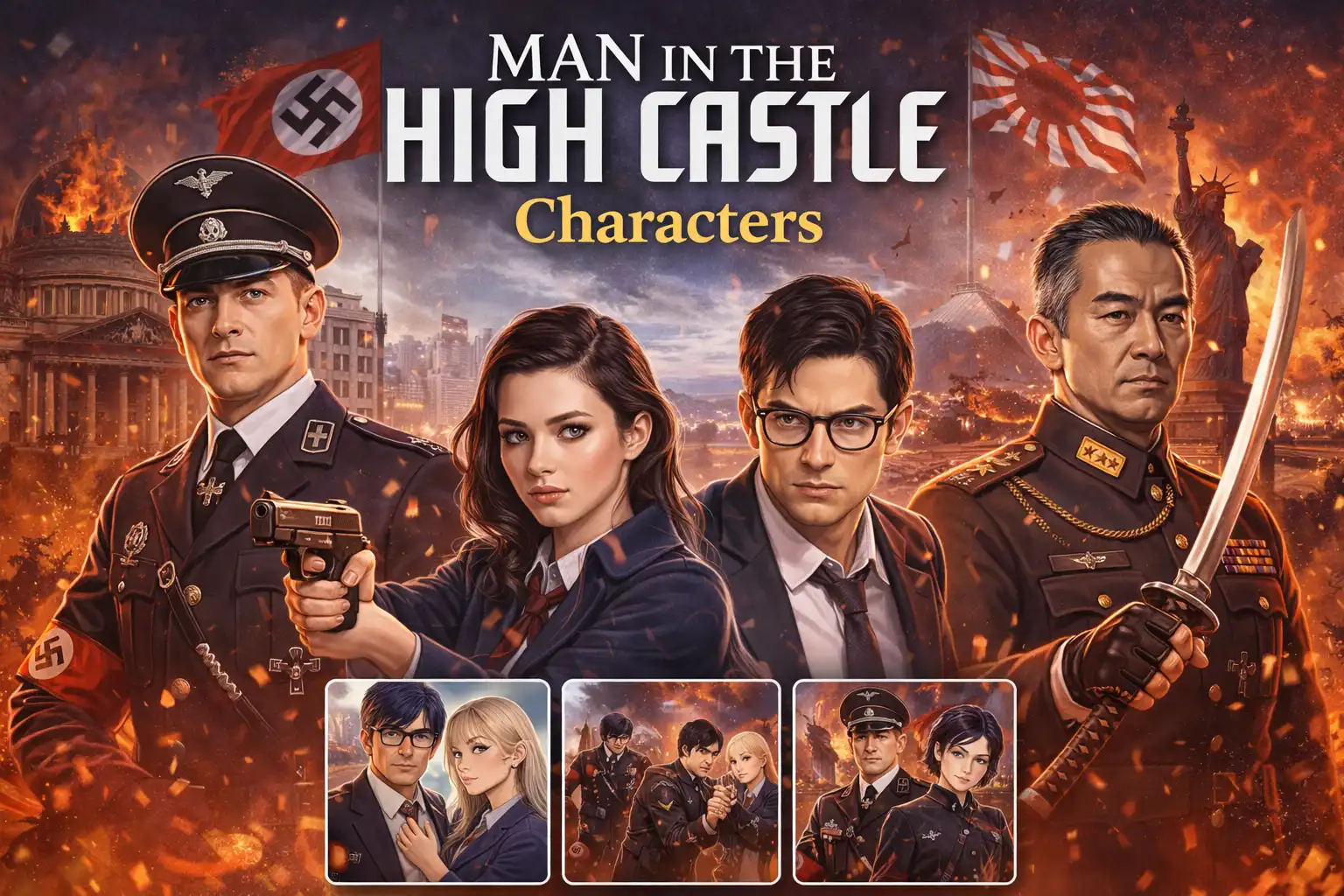
Main Characters Overview (Quick Reference)
| Character Name | Role in Story | Primary Allegiance | Core Trait |
|---|---|---|---|
| Juliana Crain | Central protagonist | Neutral / Resistance | Empathy |
| John Smith | High-ranking Nazi officer | Nazi Reich | Internal conflict |
| Joe Blake | Undercover agent | Nazi Reich | Manipulation |
| Frank Frink | Resistance ally | Anti-fascist | Moral courage |
| Nobusuke Tagomi | Trade Minister | Japanese Pacific States | Spiritual wisdom |
| Obergruppenführer Smith | Political authority | Nazi leadership | Ruthless loyalty |
Juliana Crain
Juliana Crain is the emotional and moral center of the story.
Living in the Japanese-controlled Pacific States, Juliana becomes involved in the resistance almost by accident. Her empathy, adaptability, and moral clarity make her uniquely capable of navigating a fractured world.
Juliana’s role is less about power and more about choice. She consistently questions authority and refuses to surrender her humanity.
John Smith
John Smith is one of the most complex characters in The Man in the High Castle.
As a senior officer in the Nazi regime, he is outwardly loyal and efficient. Privately, he is torn between survival, family, and morality. His internal struggle represents how ordinary people become part of oppressive systems.
John Smith’s arc forces viewers to confront uncomfortable questions about complicity and sacrifice.
Joe Blake
Joe Blake enters the story as a charming and mysterious figure.
Working secretly for the Nazi Reich, Joe manipulates others while hiding his true intentions. His shifting loyalties and emotional detachment make him unpredictable.
Joe’s character highlights how ideology can erase personal identity.
Frank Frink
Frank Frink represents the human cost of oppression.
A Jewish factory worker turned resistance member, Frank is driven by loss and injustice. Unlike trained fighters, his resistance comes from moral outrage rather than strategy.
Frank’s journey emphasizes quiet bravery rather than heroism.
Nobusuke Tagomi
Tagomi serves as a philosophical counterbalance to the brutality of the world.
As a high-ranking Japanese official, he values peace, balance, and spirituality. His belief in alternate realities challenges rigid political thinking.
Tagomi’s presence introduces themes of fate and possibility.
Antagonists And Power Figures
Beyond individual villains, the series presents systems of power as the true antagonist. High-ranking Nazi leaders, secret police, and authoritarian institutions shape the characters’ decisions.
Power in this world is cold, bureaucratic, and merciless.
Character Relationships And Moral Conflict
Relationships in The Man in the High Castle are shaped by fear, secrecy, and survival.
Trust is rare, loyalty is dangerous, and love often conflicts with ideology. Characters are forced to choose between safety and conscience.
Themes Reflected Through Characters
Rather than direct exposition, themes are revealed through character behavior:
- Moral compromise under authoritarian rule
- Identity shaped by political systems
- Resistance as a personal, not heroic, act
- The cost of obedience
Why These Characters Feel Real
The Man in the High Castle characters resonate because they are not idealized. They fail, rationalize, and survive in ways that feel uncomfortably human.
The story avoids simple good-versus-evil narratives, making each character morally complex.
Frequently Asked Questions
Who is the main character in The Man in the High Castle?
Juliana Crain is the central protagonist.
Is John Smith a villain or victim?
He is both, which is what makes his character so compelling.
Are the characters based on real people?
They are fictional, though inspired by real historical ideologies.
Final Thoughts
The Man in the High Castle characters are powerful because they explore morality under extreme conditions. Each character represents a different response to authoritarian rule, making the story emotionally heavy and intellectually engaging.
This article is written as a standalone, non-conflicting guide, with a mixed layout to keep the structure organic and human-written.